

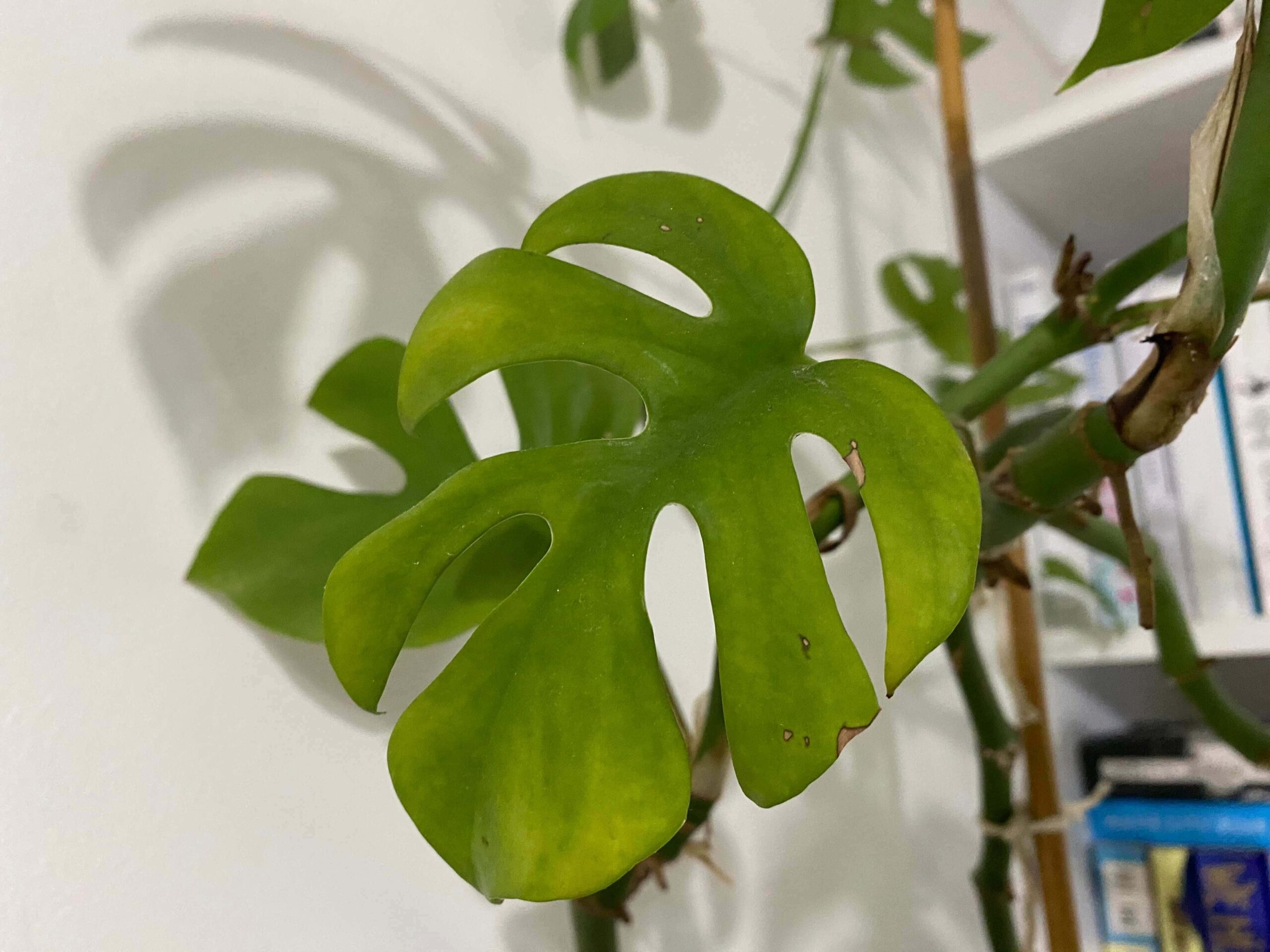
Two years ago, I bought a dying monstera plant from the reduced section at IKEA. It was droopy and lifeless, with one out of the two remaining leaves turning brown and yellow.
My fiancé had his doubts, but six months later, he was eating his hat about the new growth. Now, 24 months later, he’s amazed.
The moral of the story is, you can revive a monstera plant, no matter how far gone it is. You just need a little effort and a lot of time.
Here is my foolproof method for reviving a dying, droopy, yellowing, or browning monstera plant.
How to Revive a Monstera Plant: 5 Key Steps
Reviving a monstera plant needs patience and time. You should remove all the dead leaves, refresh the soil, repot it (in certain circumstances), increase humidity, and water the plant sparingly over the coming months.
Read the five key steps to revive a dying or dead monstera.
1. Snip off the leaves
This isn’t an essential step, but in some cases, it’s best to start again. If all the leaves on your monstera are dying, call it a day and cut them all off.
Or simply remove those that are black, brown, yellow, or spotted. Leave the stems behind, as this is where the new growth will eventually shoot from.
2. Change the soil
Soil depreciates in nutrients over time, especially if you don’t routinely fertilize. If you’ve bought the monstera from a store, it’s always a good idea to change the soil in case there are pests or poor-quality soil.
Clean the pot with soap and hot water before reusing it. If you’re changing pots, use a pot of a similar size to the root ball, or only slightly bigger. If you’ve cut all of the leaves, don’t cover the stems. Leave them protruding out of the soil.
3. Water well, but sparingly
After repotting, water the plant deeply. After this, water sparingly, leaving the soil to dry out in between waters.
Test the soil before watering to ensure it’s dry enough. Use a soil moisture tester, or poke your finger into the soil. If it’s too wet, the soil will stick to you.
4. Increase humidity
Monstera plants love humidity, but hate direct sunlight. If you want your monstera to bush out or grow new leaves, increase humidity.
You can use a humidifier, or keep the monstera in a warm, humid place (like on a window ledge in a kitchen or bathroom).
I’ve even placed a monstera in a plastic greenhouse before (not in direct sunlight) during summer, and it revived it faster than any humidifier ever has.
5. Wait…
Unfortunately, reviving a monstera plant takes time. Once you’ve set up the perfect environment for your monstera, you simply have to wait.
Keep watering as needed, and keep the humidity as high as possible. Eventually, you’ll start seeing new leaves sprouting off the stems.
6. Fertilize (optional)
You can fertilize your monstera plant, if needed. It’s best to avoid fertilizing in winter, but if new growth appears, fertilizing can speed things up.
In spring and fall, you can fertilize a monstera every two to four weeks. This should increase new growth rates and help revive it faster.
FAQs
Can Monstera Leaves Be Revived After Browning?
No, unfortunately, monstera leaves can’t be revived after they turn brown, but the plant can still survive and flourish.
Snip off the dead and address the issues that caused the leaves to turn brown (common causes include overwatering or underwatering).
New leaves will soon grow in their place, especially if you fertilize the plant during the growing season and increase humidity.
How to Fix a Sad or Struggling Monstera Plant?
A sad monstera plant may look droopy, with wilting leaves. While a struggling monstera plant may have dying leaves or no new growth.
Try some of the following to help fix a sad or struggling monstera:
- Fertilize: Potted soil loses its nutrients with time and regular watering. Fertilizing your plant replenishes the soil, and can promote new growth and help monstera leaves grow larger and greener.
- Repot: A monstera can struggle if it’s outgrown its pot, which can make it rootbound. There is an easy fix. Simply repot your sad monstera into a slightly larger pot, and it will continue growing.
- Change soil: If pests (like fungus gnats) have infected your soil, it isn’t worth keeping. It will have lost its nutrients, and there will be too many eggs in the soil to eradicate the problem entirely. Change the soil and your monstera will look healthier again.
- Move locations: Warm and indirectly sunny conditions are ideal for monsteras. If there’s too much shade, not enough airflow, or too much sun in the current location, your monstera may struggle.
- Increase humidity: Most species of monstera love and appreciate high humidity. Try a pebble tray beneath the pot, a humidifier, or placing your monstera in a warm, humid, but airy, location.
- Increase watering: Monstera with droopy or wilting leaves is crying out for water. Water the plant deeply and increase your watering schedule (especially during warm weather) to keep it happy.
Summary
The good news is, a struggling monstera plant can almost always be revived by taking the right action.
It may take days, months, or even years before you start seeing progress, depending on how bad a condition the plant was in to begin with.
But eventually, you’ll start seeing signs of life again.
So just because you’ve spotted a dying monstera in the supermarket, or you’ve neglected a plant too long and its leaves have turned black, it doesn’t mean it’s past saving.
With time, patience, and a little effort, it can thrive again.