

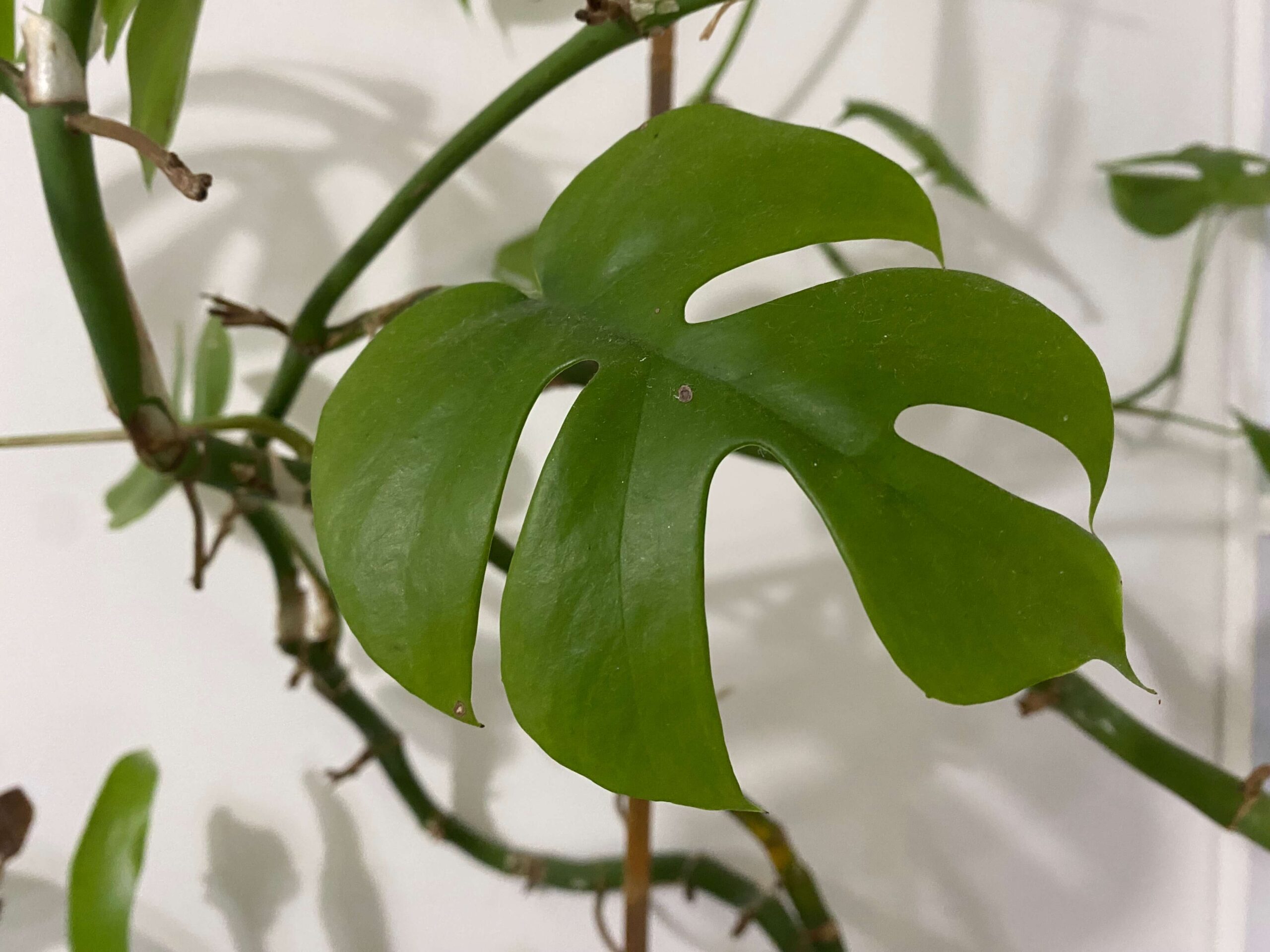
Black leaves on a monstera are common, and the cause depends on where the discoloration appears.
It’s usually due to overwatering, sunburn, sunlight deficiency, nutrient deficiency, extreme cold, or a pest infestation (I know that doesn’t narrow it down!).
It can be nothing to worry about – it’s normal for new or old growth to die out on a plant every once in a while. Whatever caused the black leaf may not be serious enough to warrant a fix (other than plucking it away).
But sometimes, black leaves on a monstera may need your attention. Otherwise, more leaves could turn black, and your houseplant could begin to die.
Learn common causes and the best fixes.
Causes of Black Leaves on Monstera
There are many causes – which are similar problems you’ll find on most houseplants. How to fix blackening leaves depends on the exact cause:
Overwatering
- Signs: It’s common for monstera leaves to turn black from overwatering. If the leaf is new, the “death” may be caused by the excessive moisture. If older leaves are turning black, it can be a sign of root rot.
- How to fix: Remove the black leaves and let the soil dry out fully in between watering. Make sure the pot has a drainage hole and a plate beneath it to allow water to flow away from the roots. If the root rot is severe, you may need to change the soil.
Lack of sunlight
- Signs: New growth dying and turning black, no new growth for long periods, and new shoots dying/browning before unfurling are all crucial signs that your monstera isn’t getting enough sunlight.
- How to fix: Place the houseplant in a warmer, sunnier position (not in full sunlight) or increase the humidity to help new leaves survive and promote more growth.
Sunburn
- Signs: Dark spots appearing on the leaf and around the edges are a common sign of sunburn. The spots may appear black and small, or they may be large and dark brown. Sections of the leaf may also turn dry and crumbly.
- How to fix: Move the houseplant into a less sunny position. You can remove the affected leaves, as they will not recover from the sunburn. Removing the leaves will, however, promote new growth.
Too cold environment
- Signs: No new growth, new leaves turning black, or new growth not unfurling can all be signs that the environment is too cold and dry for your monstera.
- How to fix: Move the plant somewhere warmer, like on a sunnier window ledge, or somewhere with more humidity, like in a bathroom or kitchen. You can also use and set up a houseplant humidifier.
Pro tip: I once placed my monstera in a greenhouse with frosted glass. Growth had completely stunted. But after a few weeks, new growth appeared quickly, and the monstera not only recovered, but bushed out so much, I had to find a new home for it when I brought it back inside!
Lack of nutrients
- Signs: There shouldn’t be any yellowing on a monstera’s leaves when there’s a lack of nutrients. Growth will likely stunt, and existing leaves may begin turning brown and then black, before falling off.
- How to fix: Renew the soil or give your monstera fertilizer. It’s best to apply fertilizer in spring, summer, or fall, unless there are signs of new growth in winter.
Fungal infection
- Signs: Fungal infections can be pretty serious for your houseplant. Common signs can include rotted roots, yellowing leaves (before turning black), soggy soil, and signs of pests.
- How to fix: If it’s simply a gnat infestation, you can use yellow sticky traps, repot the soil, and reduce watering. If there’s a more serious infection, you may need to remove the soil, rinse/sterilize the roots, deep-clean the pot, and repot with new soil.
How to Fix Black Leaves on Monstera
There is no fix for black, brown, or blackening leaves on a monstera.
They won’t come back to life, so you’ll have to trim or pluck them. However, you should uncover the cause so you can prevent it from recurring in the future.
For example, if too much sunlight was the problem, move the plant to a spot with indirect light or more shade.
Or, if overwatering was the issue, let the soil dry out and test its dryness with a soil tester or your finger before watering again.
Which Monstera Leaves Have Turned Black?
The issue can be better pinpointed when you know which “type” of monstera leaf has turned black – from new leaves and unfurled growth, to the edges or middles of the leaf.
New leaves
When new leaves on a monstera turn black, it can be because the soil is too dry, there’s too little humidity, or the plant is receiving too much direct sunlight.
If the leaf turned yellow before turning black, the cause could be overwatering instead.
Unfurled growth
Unfurled leaves refer to new growth that starts to grow on a stem or existing leaf, but shrivels, blackens, and crisps up before it becomes a leaf.
This is usually caused by underwatering, lack of sunlight, or a lack of humidity – or a combination of all three.
Leaf edges
There are two types of issues here – black edges, or black edges surrounded by a pale-yellow lining. The former (just black edges) is usually caused by underwatering the plant.
The latter (black and yellowing) is normally caused by overwatering.
Spotting
Black spots on monstera leaves can have a range of causes.
It can be sunburn, underwatering, overwatering (when there’s yellowing around the black spots), overfertilization, or a pest/fungal infestation.
Summary
Monstera are like any other houseplant, so if there are dying leaves on your monstera, it’s likely one of the “usual” causes. Sometimes, you can simply remove the dead leaf and leave it longer before watering again.
But it depends on which leaves are dying and what happens during their decline. In cases of root rot or pest/fungal infestations, you’ll need to take more action to save your houseplant before it’s too late.
I’ve experienced black leaves on my monstera more times than I’d like to admit. I’ve never been able to save the dying/dead leaves, but I’ve always managed to save the houseplant from further damage.
So as long as you act quickly and fix your mistakes, your monstera will go back to being healthy, happy, and growing in no time!